

It’s not just the large and scary which arrest the attention of animals in the bushveld. At times, it’s the ‘little guys’ who call the shots, as was evidenced in this heartwarming sighting.
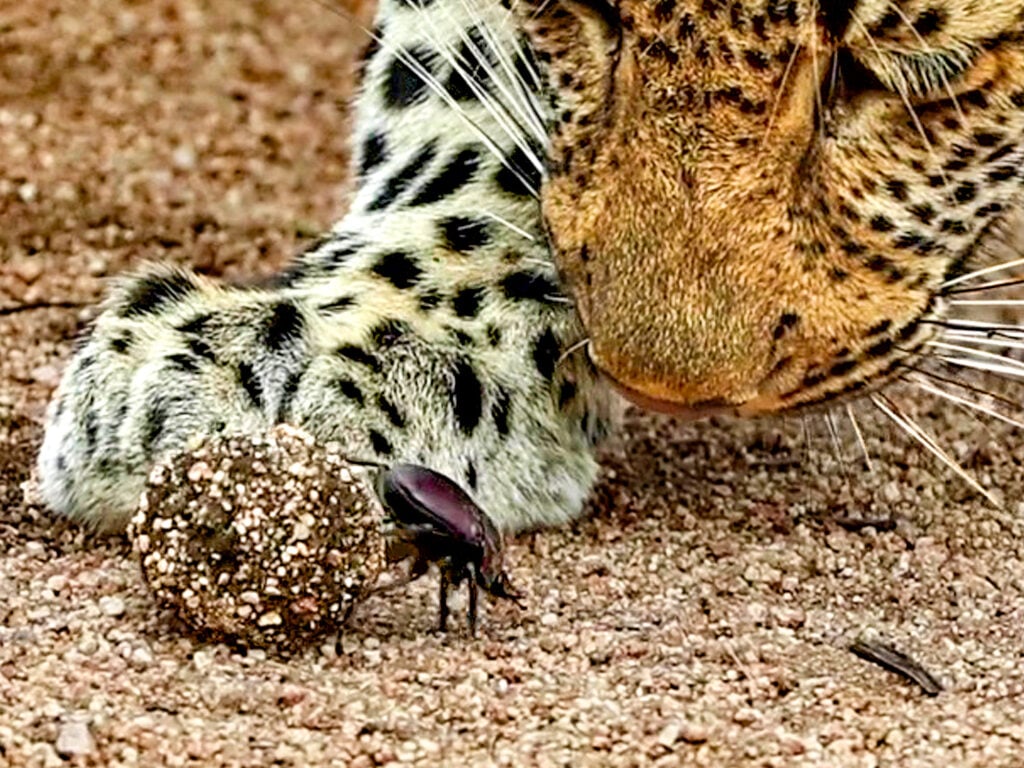
Dung beetle intrigues passing leopard
A dung beetle was quite content going its way, with a ball of dung in tow, when a leopard came across it.
Dung beetles are much smaller than leopards, however, as far as beetles go; they are giants. They can vary greatly in size, and can reach around 5 to 6 centimetres.
Their bodies are compact, oval and protected by a tough, shiny exoskeleton which shields them from predators and rough terrain. The curious leopard stood little chance of harming the busy beetle because of this armed protection.
Get our Best Sightings as they Come in
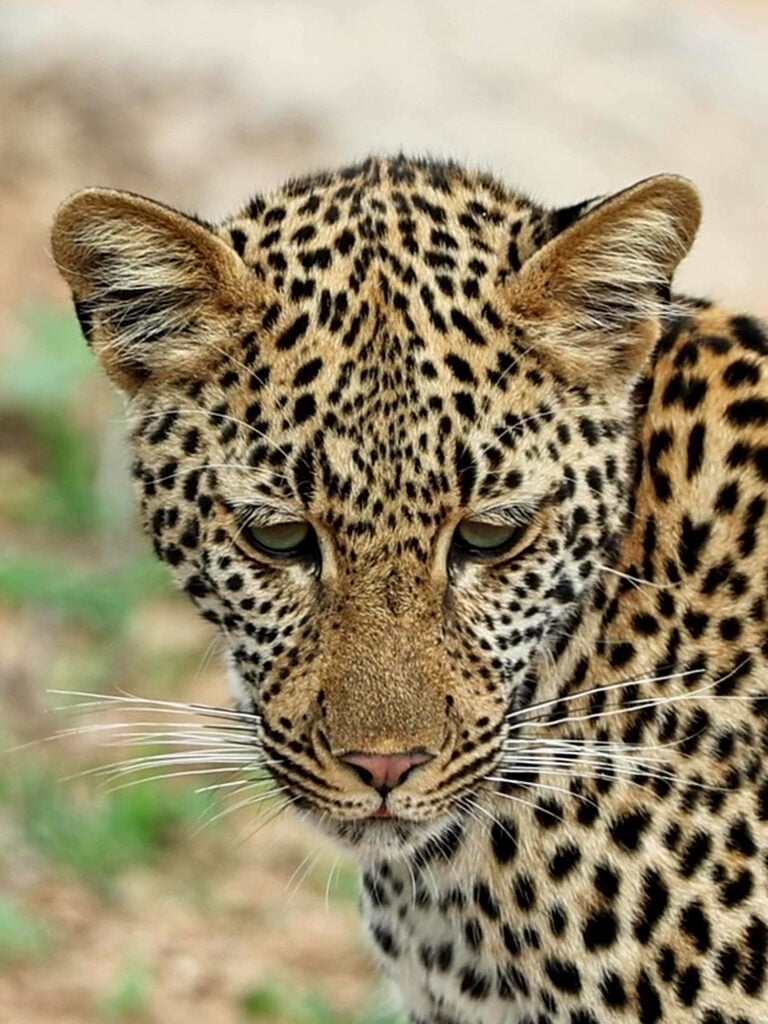
The leopard watched with an expression of pure intrigue on its face. Who was this busy creature with such purpose and determinaton?
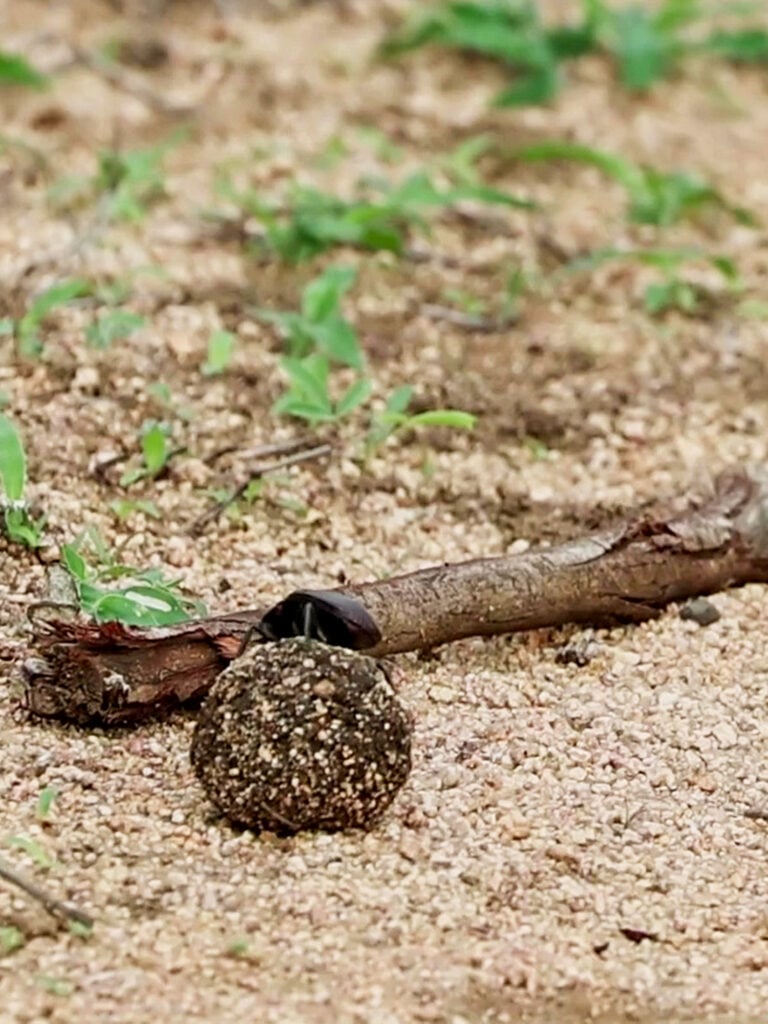
Meanwhile, the dung beetle continued to roll a perfectly-shaped ball of dung along the sand road.
Dung beetles have six powerful legs, with the front pair adapted into strong, shovel-like structures for digging and shaping dung. Their antennae end in fan-shaped clubs packed with sensory receptors which can detect the scent of fresh dung from remarkable distances.
Essentially, they are perfectly suited for the job of sorting, rolling and redistributing dung. It’s not the most glamorous of jobs but these beetles do the work with flying colours.
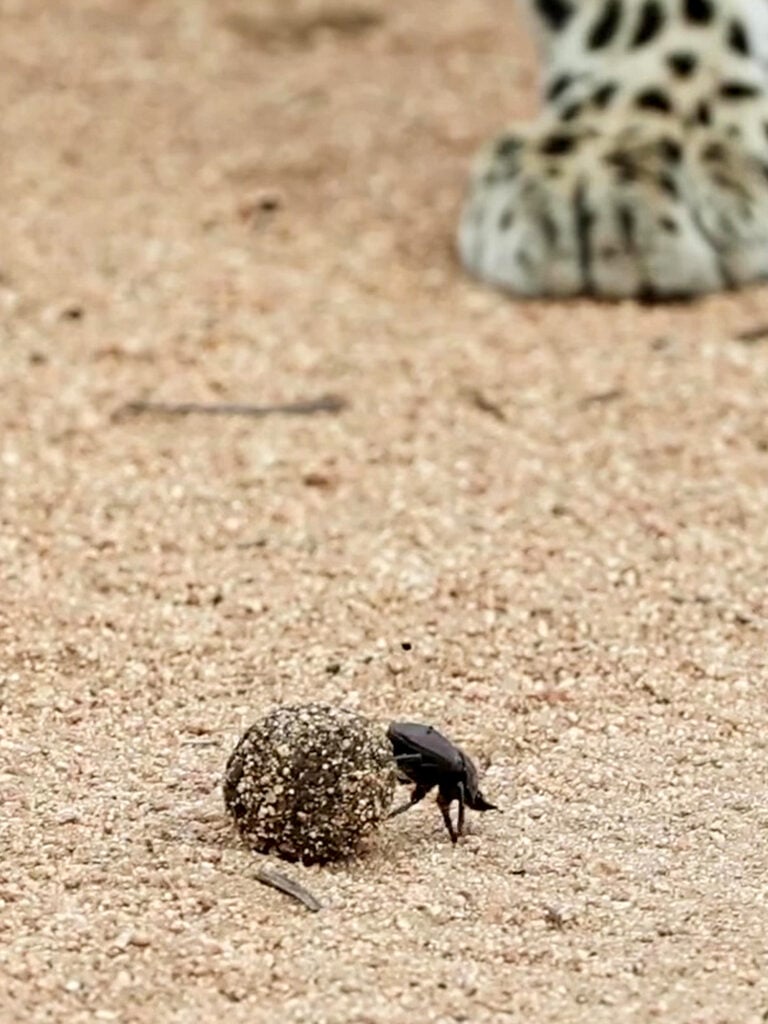
Beetle takes work very seriously
The beetle continued to move across the sandy area. This open area of road provided the least resistance, and the beetle showed it took its work very seriously.
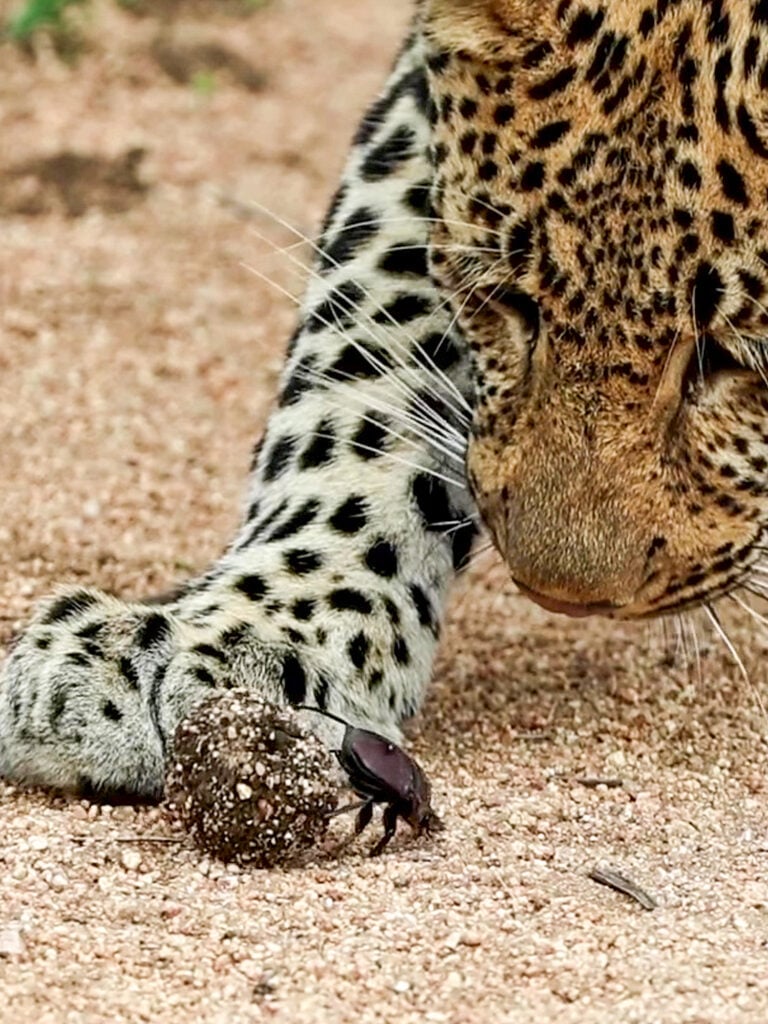
Dung beetles are also among the hardest-working insects in the MalaMala Game Reserve. They play a vital role in maintaining the health of the ecosystem.
South Africa is home to more than 800 species of dung beetles, with many found across the Greater Kruger region, including MalaMala.
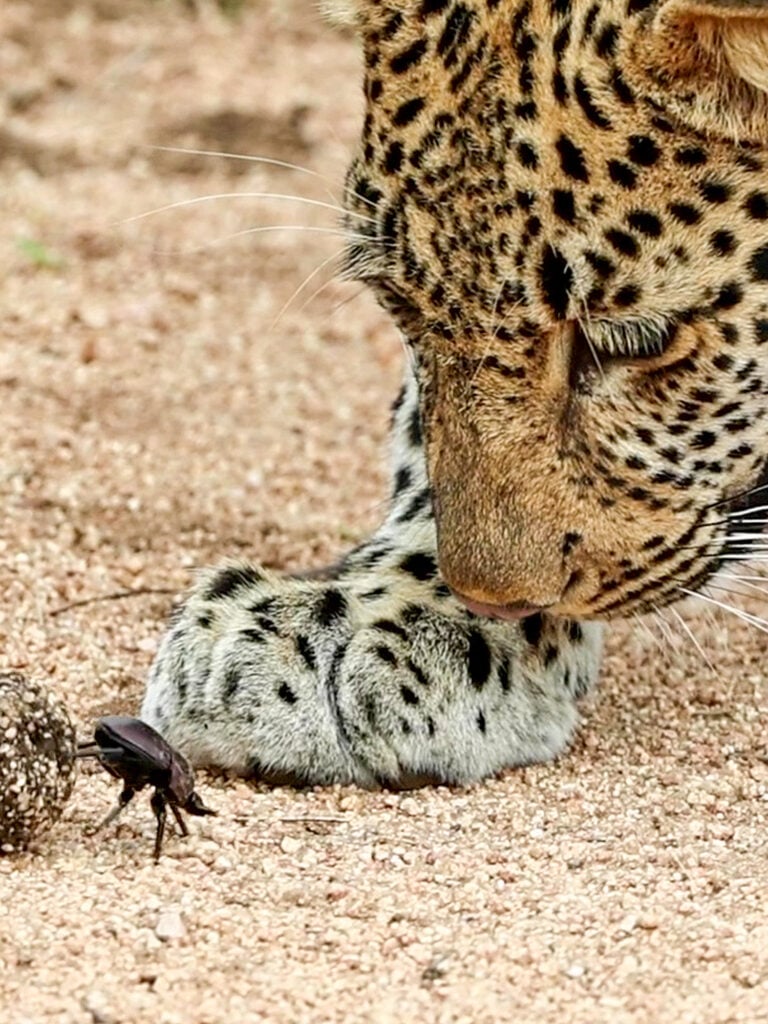
The beetle passed quite confidently right underneath the leopard’s nose. It was too busy at work to worry about the nosy predator.
An incredible display of strength
The ball was many times its size. The size of a dung ball depends on the species of dung beetle and the size of the beetle itself. Most ball-rolling dung beetles create balls ranging from about 1 to 5 centimetres in diameter, although the larger species can roll balls measuring up to 8 to 10 centimetres across when working with abundant dung.
What makes this remarkable is not the absolute size of the ball, but its weight. A dung ball can weigh 10 to more than 50 times the beetle’s own body weight, depending on the species.
Some dung beetles weigh only a few grams yet can roll a ball several times larger than themselves across uneven ground, backwards, using their powerful hind legs.
Leopards, on the other hand, are the strongest big cats relative to their size. A leopard can drag prey weighing two to three times its own body weight over considerable distances. They are famous for hoisting carcasses weighing 50 to 100 kilograms, and sometimes even heavier, several metres up into the branches of a tree.
However, the strength of this little creature in rolling a ball many times its body weight made it seem the leopard had finally met its match!
View the bushveld’s strongest with our updates
South Africa’s game reserves abound with life, and impressive displays of strength. We’ll keep you updated with the strongest animals… and insects. Click here to join our WhatsApp updates group.


