

An Alarm Call Leads to Something Extraordinary
It started with sound. A chorus of impala alarm calls cut through the Ngala bush, the kind of urgent, repetitive snorting that every seasoned guide knows means something serious is unfolding nearby.
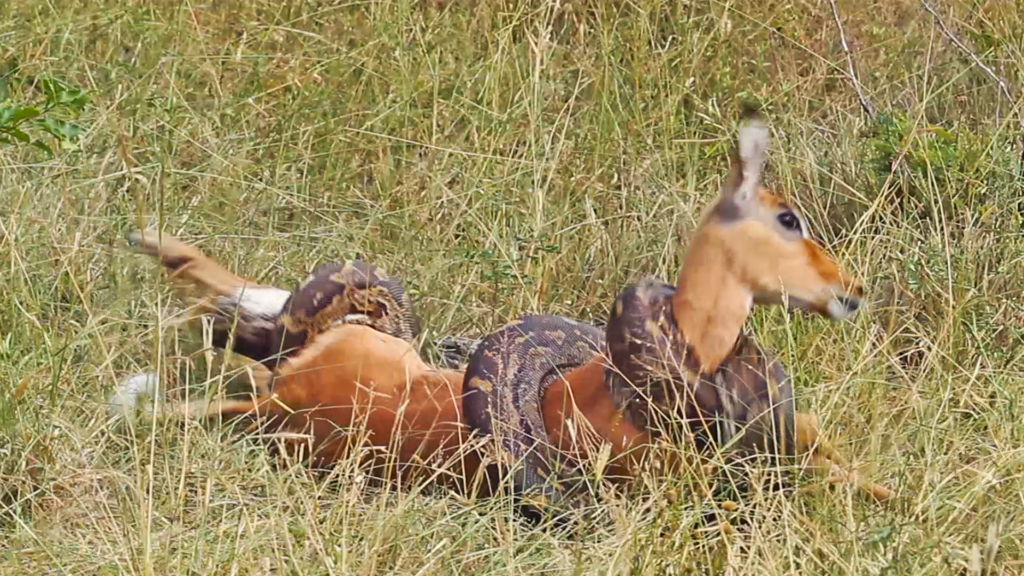
Roan du Plessis followed the commotion and found exactly that: a massive African rock python locked in a tight coil around an impala, squeezing the life out of it with quiet, methodical force.
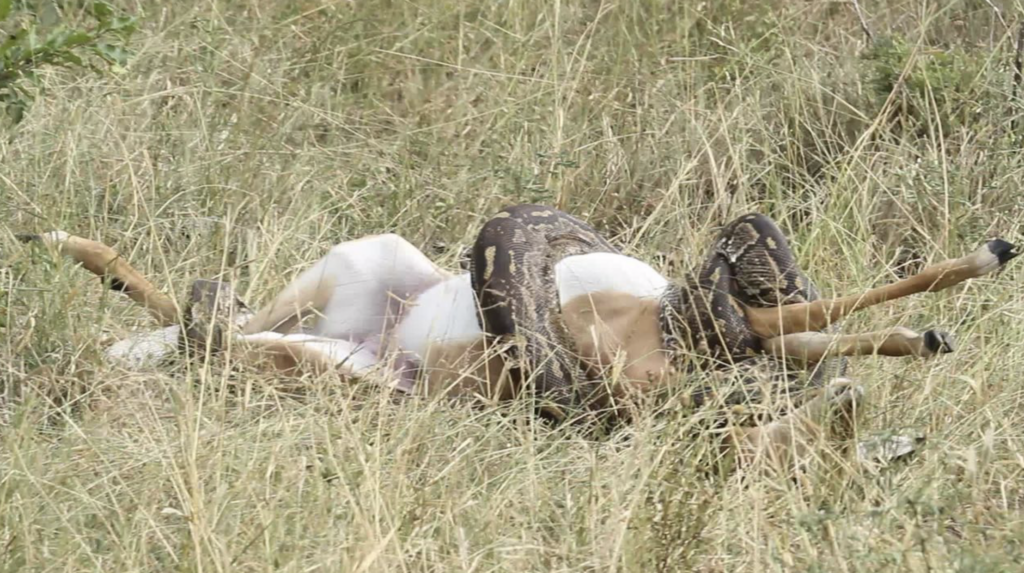
By Roan’s estimate, the python had likely made its strike roughly 15 minutes before they arrived. The ambush was already done. What remained was the waiting game.
A Fight That Wouldn’t Quit
Despite the python’s grip, the impala wasn’t ready to surrender. Every so often, it would summon what little strength remained and attempt to wrench itself free.
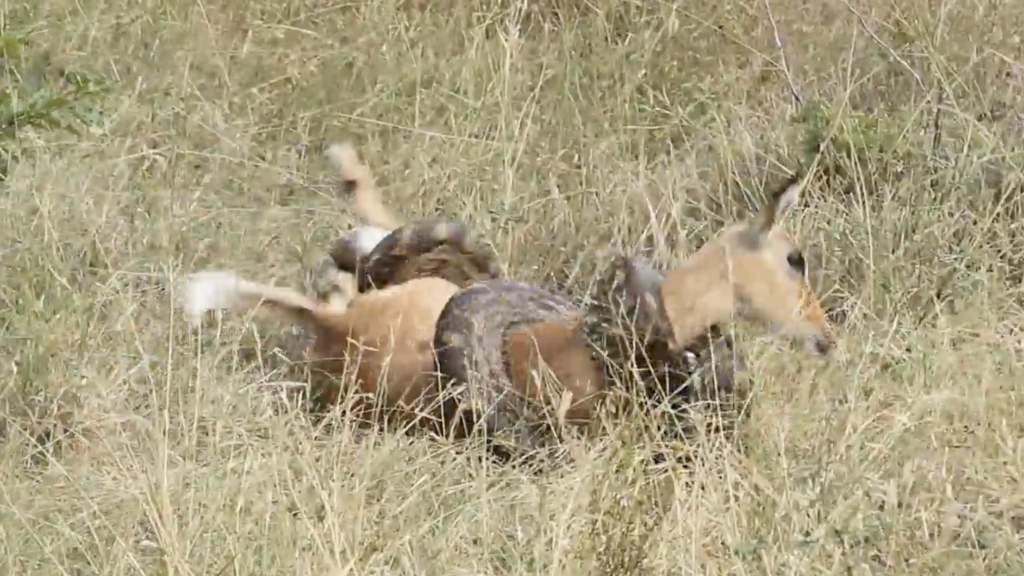
Its legs scrambled and body twisted against the suffocating coils. It was a heartbreaking thing to witness, the stubborn flicker of survival instinct refusing to go quietly, but the python held firm.
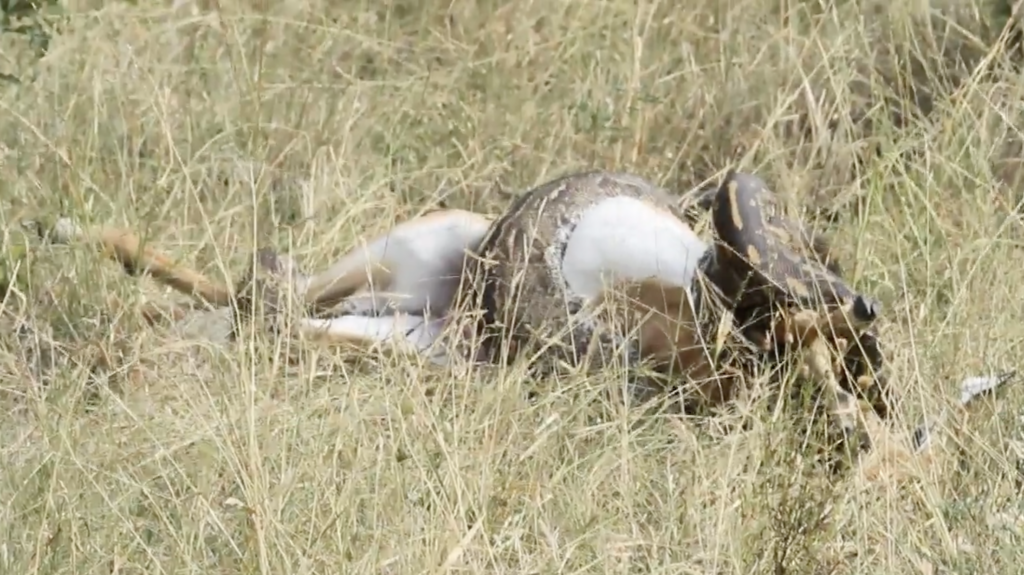
Rock pythons don’t crush bones; they constrict with just enough pressure to prevent the chest from expanding, and they wait. Each time the impala exhaled, the coils tightened fractionally and there was no escaping it.
Stay in the Loop
If you want to catch more incredible moments like this as they happen, join our WhatsApp updates group where we share the latest viral wildlife encounters and incredible sightings from across the bush.
Dragged Into the Shadows
As time passed, the python began repositioning. It dragged the impala deeper beneath a thicket of vegetation, pulling its meal out of the open and into cover.
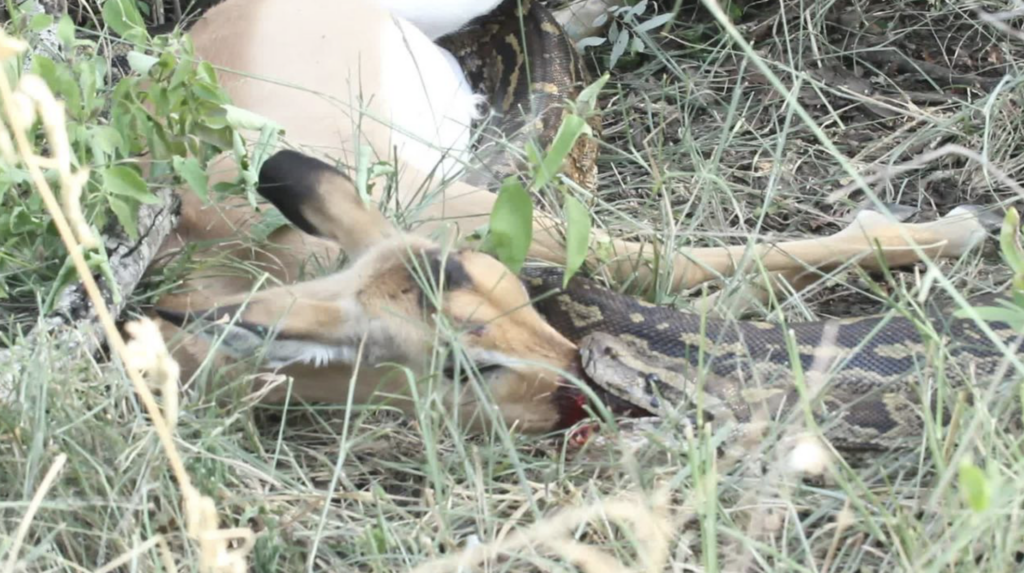
This is typical behaviour for a python following a large kill. Exposed and heavily committed, a feeding python is about as vulnerable as this species ever gets, and instinct drives them toward shade and concealment.
Get our Best Sightings as they Come in
By the afternoon, the impala had taken its last breath and the real spectacle began.
The Impossible Meal
Watching a rock python consume an impala is one of those sightings that stretches the imagination. The snake’s lower jaw is connected by elastic ligaments rather than a fixed joint, allowing it to unhinge and spread in a way that seems physically impossible given the size of the prey.
Roan captured the python working its way through the process with extraordinary patience, easing the impala’s head and then its torso into its mouth in slow, almost imperceptible movements. The skin stretches, the body distorts, and yet the python persists.
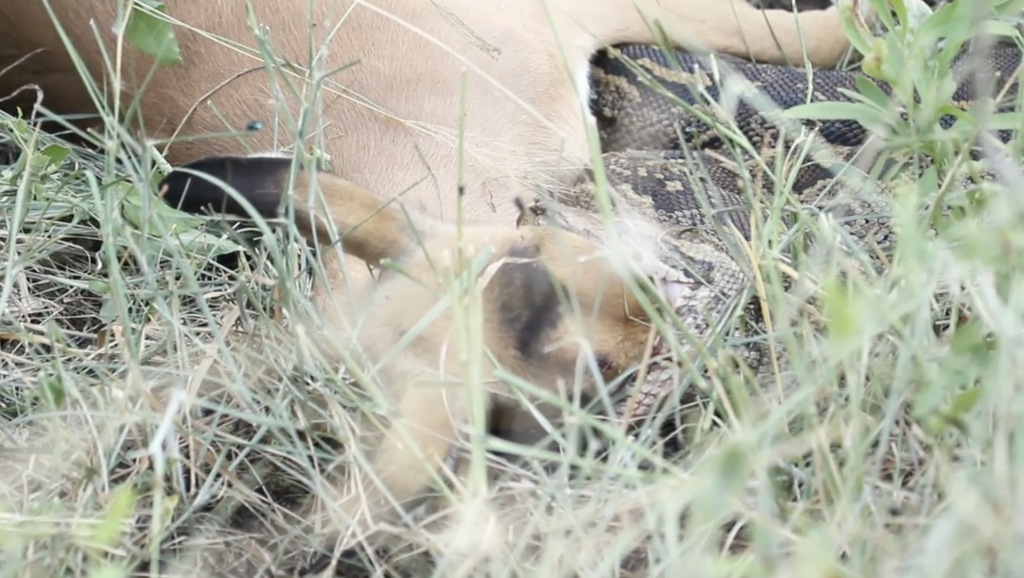
It is equal parts unsettling and awe-inspiring.
Consuming a meal this size can take several hours, and during that entire window, the python is sluggish and largely defenceless. It cannot flee, it cannot strike effectively, and it relies entirely on its chosen hiding spot to keep it safe.
Nature’s Most Patient Predator
What Roan’s sighting captures so vividly is the sheer commitment involved in being a python. The ambush, the wait, the slow consumption, and the long vulnerable aftermath all highlight that there are no shortcuts this predator can take.
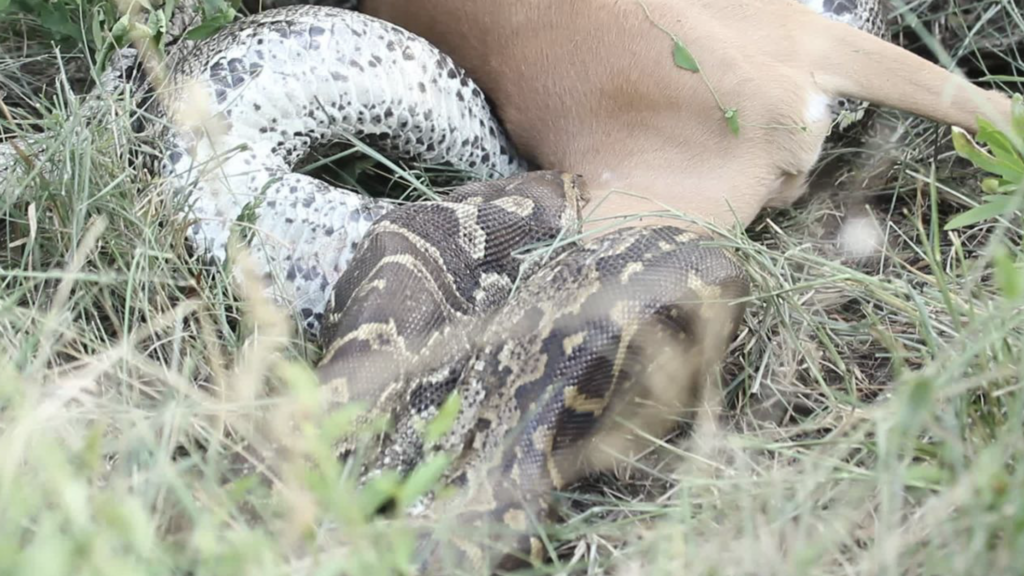
It is a reminder that in the wild, every animal must work hard to earn a meal. A sighting like this, however difficult to watch, is a rare window into one of Africa’s most remarkable survival strategies playing out exactly as it has for millions of years.


