

Our regular readers will have been awed by many spectacular sightings of Africa’s spotted cats: leopards and cheetahs. In this article, we leave the continent to see a jaguar doing what jaguars do best.
Wildlife guide Nick Kleer shared this remarkable footage with Latest Sightings. He filmed the action while visiting Brazil’s Pantanal Wetlands.
Leopardlike
As we join Nick at the sighting, we see what at first glance appears to be a leopard in a tree. However, it is a jaguar, the sole member of the genus Panthera native to the Americas.
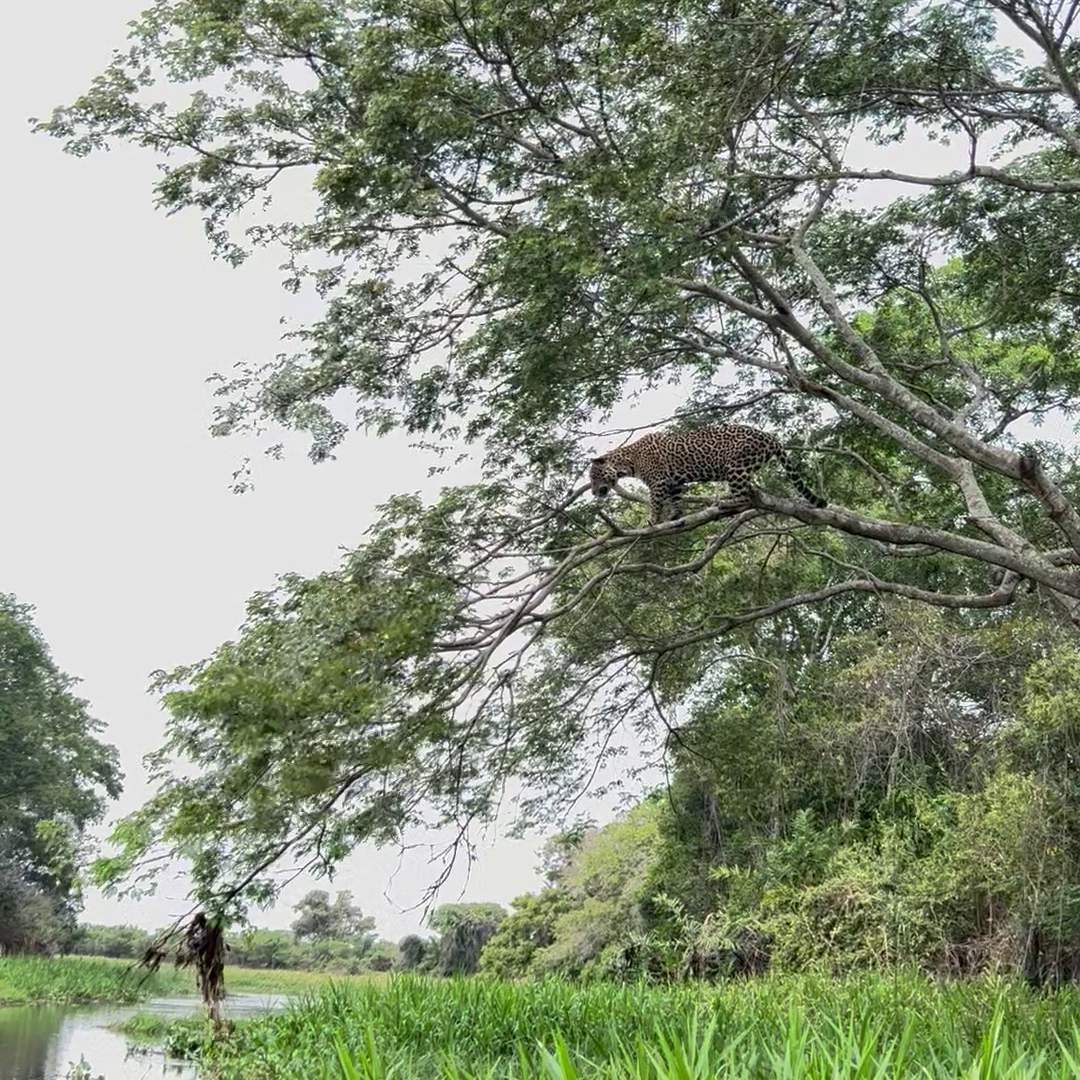
Like leopards, jaguars are competent climbers. In this instance, the cat has literally gone out on a limb in the hopes of spotting prey in the water below.
Ambush hunters
Like leopards, jaguars are stalk-and-ambush hunters. This means that they use stealth, aided by their distinctive camouflaged coats, to stalk within striking distance of their prey.
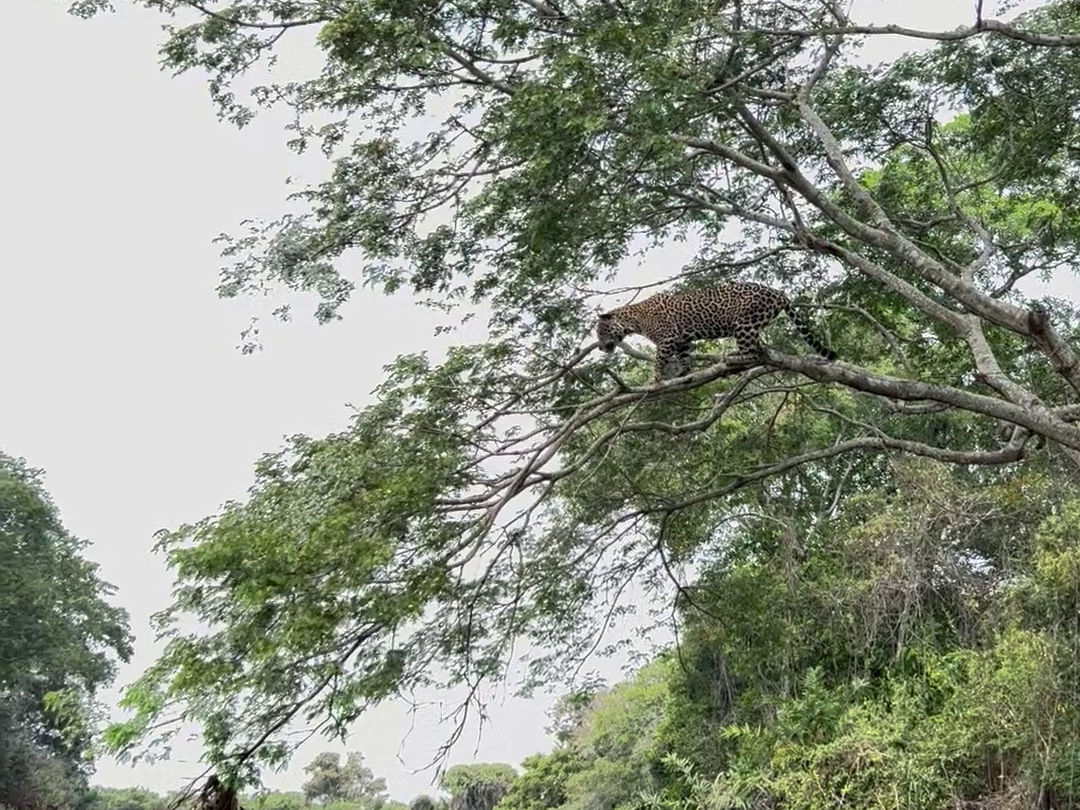
And, in the aquatic environment of the Pantanal, much of their hunting is done along the riverbanks. There, they target a wide variety of prey, of which the capybara and giant anteater are the most commonly targeted.
Never Miss A Viral Safari Video
Amazing hunting sequences, like this jaguar ambushing a victim, are popular with our members. To be among the first to see our latest sighting videos, join our exclusive alert list. Click the button above to join the WhatsApp chat right now and never miss another thrilling moment.
Preparing to pounce
After waiting patiently, the predator remains motionless as it spots movement in the water below. Then, very subtly, it lowers itself as it prepares to pounce.
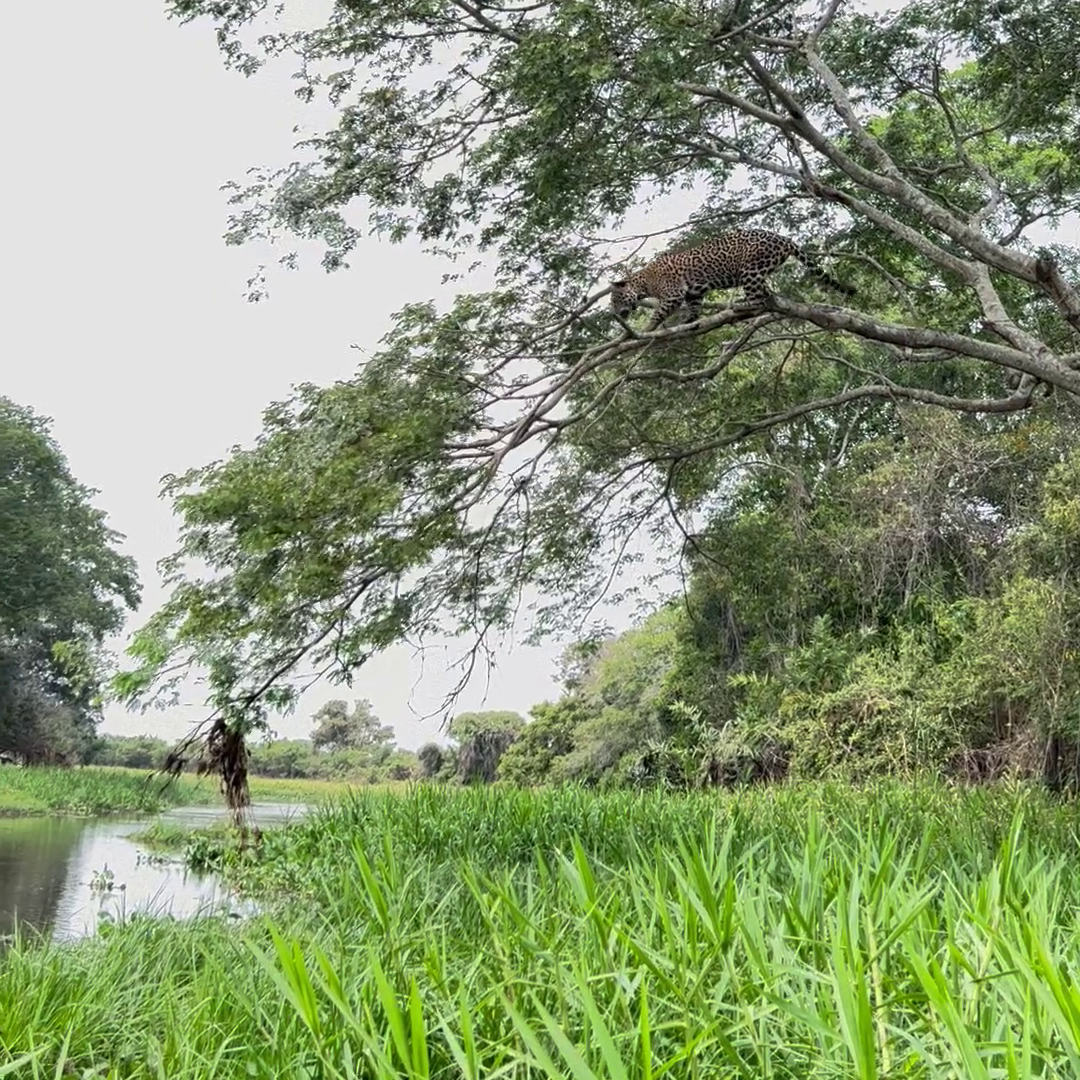
Jaguars can jump enormous distances, up to 6 metres horizontally and 3 metres vertically. Launching an ambush with a leap adds to the element of surprise, giving prey less time to react.
Launch sequence activated
Using the powerful muscles of its hind legs, the jaguar launches itself towards the as-yet-unseen prey. Success will depend on an unimpeded trajectory.
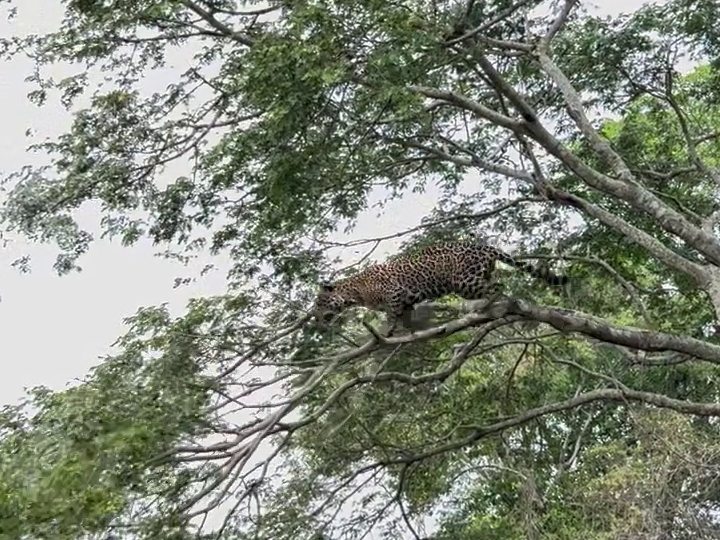
However, as it flies towards its target, it looks like it breaks a twig, sending it splashing into the water ahead of it.
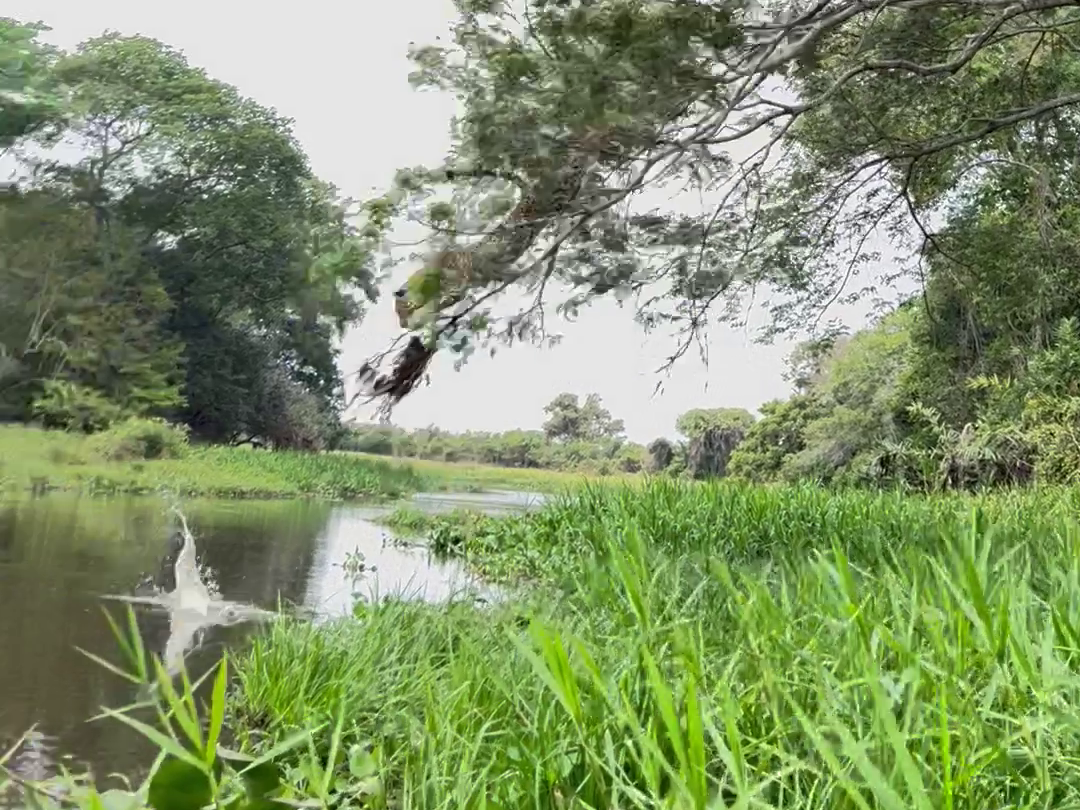
But will the split-second it takes to reach the same point make a difference?
Claws outstretched
Get our Best Sightings as they Come in
Throughout its flight, the jaguars eyes have remained locked onto its target. Consequently, as it nears the water it extends its paws in a catching position.
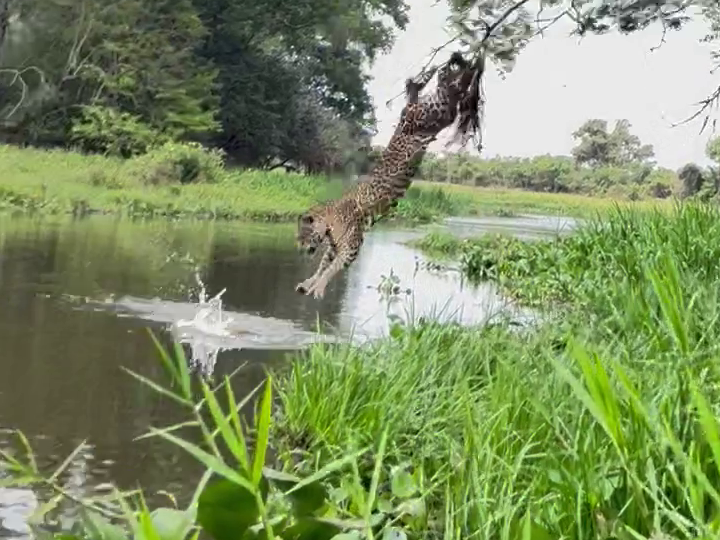
Each paw is equipped with 5–6 cm claws, ready to secure prey in a vice-like grip. Unlike most other big cats, jaguars often deliver a killing bite directly to the skull.
Splashdown
Just over a second after it leapt, the cat dives into the water, and we wait to see whether it was successful.
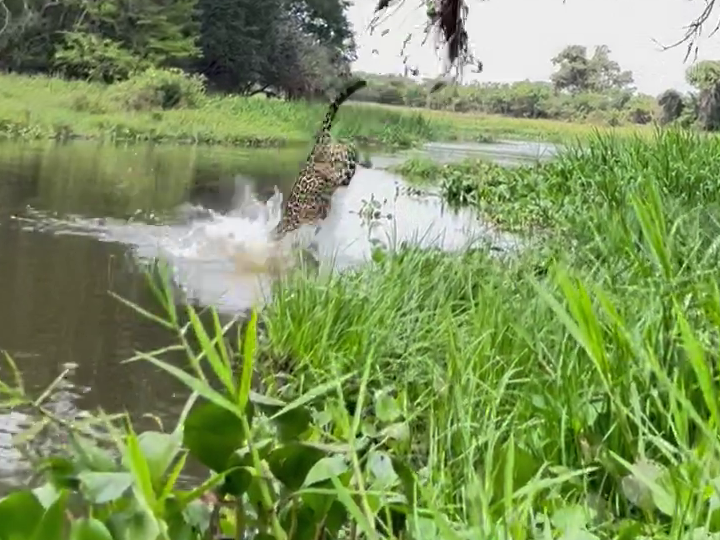
However, as a shower of water goes up, we glimpse what appears to be the head of a capybara making good its escape.
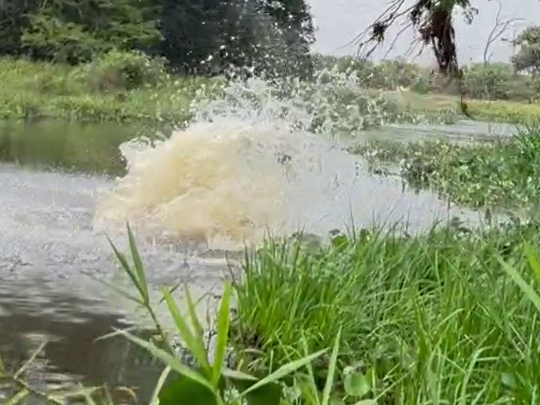
Presumably, the twig that hit the water earlier was sufficient for it to react in time.
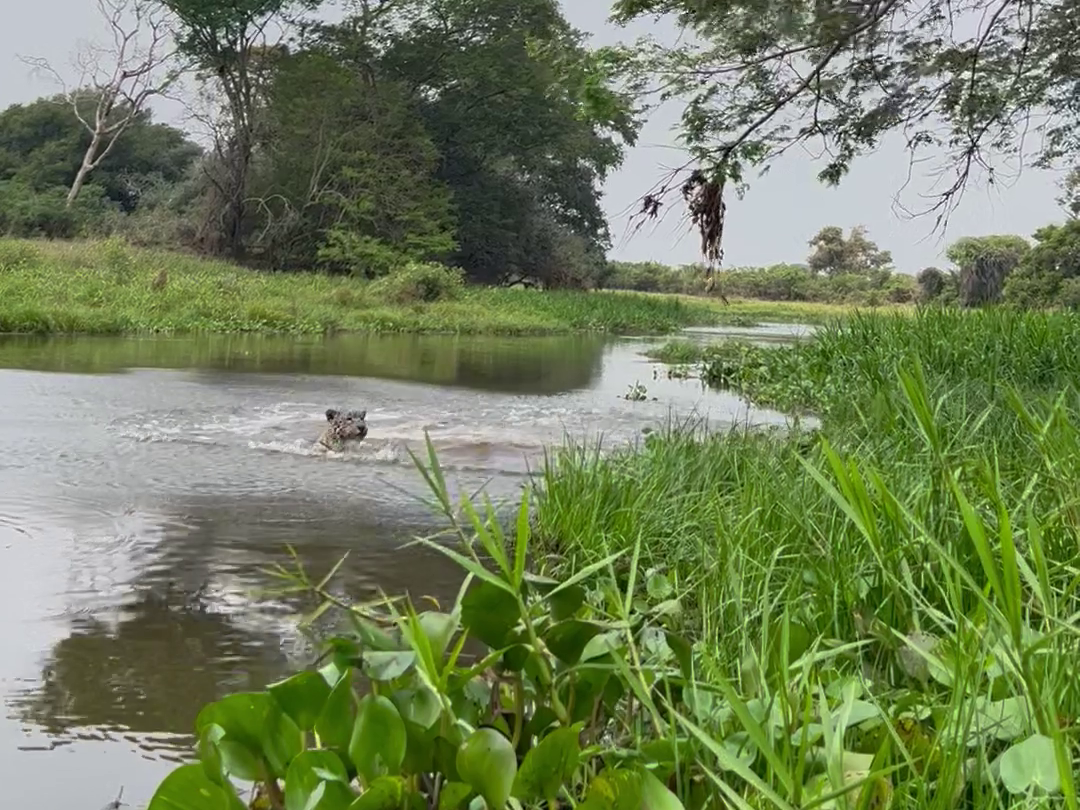
Consequently, when the jaguar resurfaces seconds later, it immediately looks for the escapee.
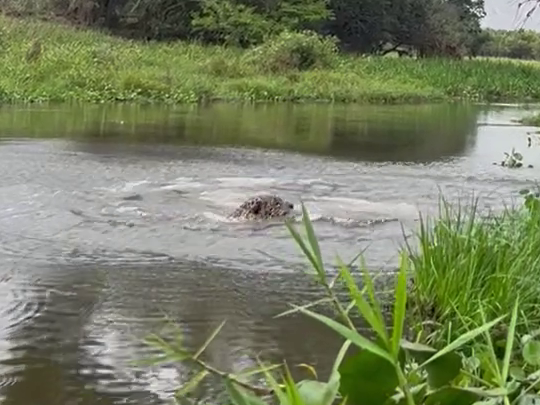
Nick’s video ends as the cat swims to shore. Like most big cats, jaguars succeed in only one of three attempts. Better luck next time, big guy.


