


Cute and playful, otters are surely one of the world’s most beloved creatures. In this endearing footage, we witness an otter family at play before they return to the icy water.
Wildlife guide Andrea Baratte submitted this delightful footage to Latest Sightings. He filmed it in Yellowstone National Park, USA.
Otters on ice
As Andrea’s video begins, the sight of two otters instantly warms our hearts as they play on snowy bank of a river.
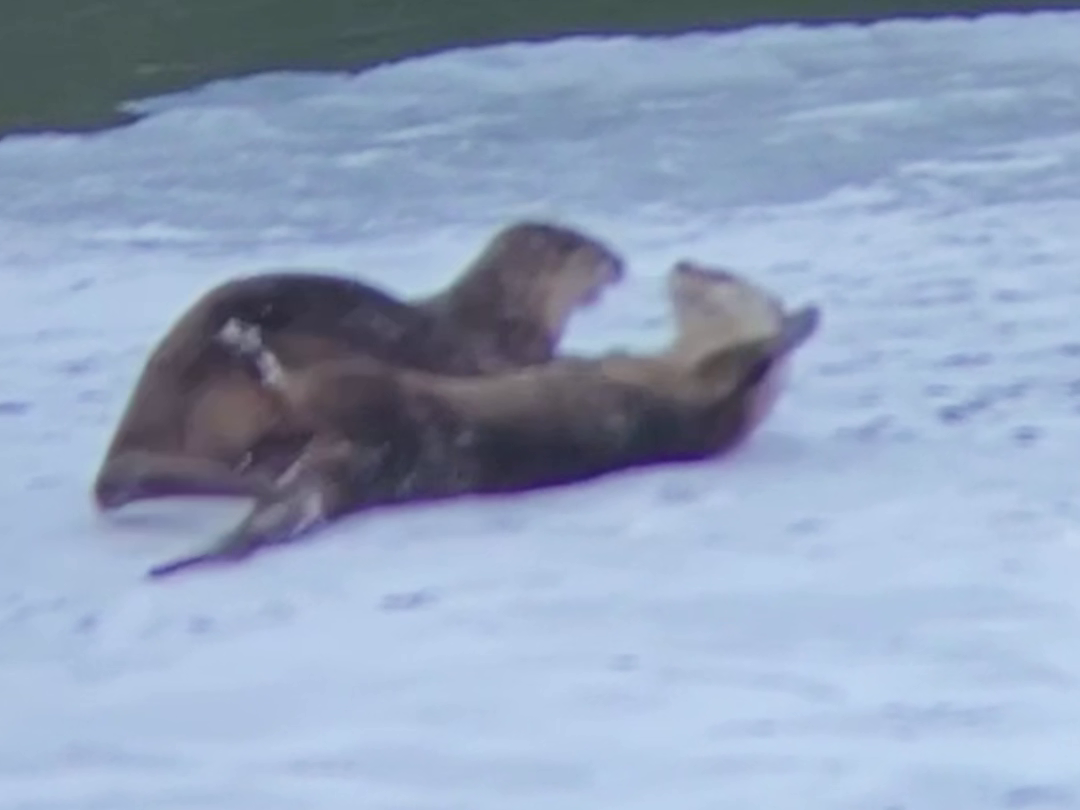
These are North American river otters (Lontra canadensis), the only species found in the park. Worldwide, 14 species live in both freshwater and saltwater habitats.
Playful personalities
From a human perspective, otters appear to be very playful creatures. Accordingly, it is a delight to watch them interact with such apparent affection.
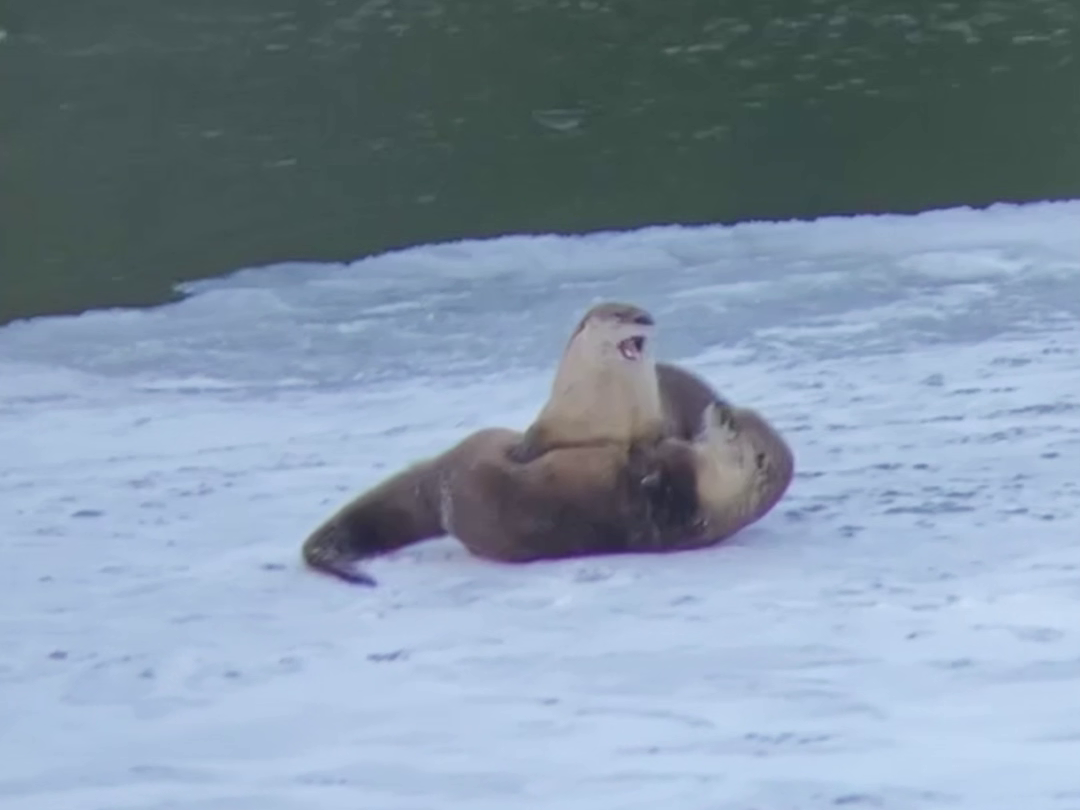
Scientists consider river otters a social species, although some individuals live solitary lives. In group settings, they display near-constant, energetic behaviour.
Never Miss A Viral Safari Video
Adorable sightings, like these wrestling river otters, are popular with our members. To be among the first to see our latest sighting videos, join our exclusive alert list. Click the button below to join the WhatsApp chat right now and never miss another thrilling moment.
Sensitive snouts
River otters have long, stiff whiskers used to detect their prey, such as fish, amphibians, shellfish, and insects. Thanks to their extreme sensitivity to electrical discharges, they can hunt in murky water.

In Yellowstone, otters do not hibernate, relying on warm springs to hunt year-round. At night, they make use of a den or a holt lined with vegetation and fur.
Happy families

Suddenly, a third otter joins the playful pair. This suggests that one of them is a pup. Females give birth annually to up to five pups

Although otters mate in late winter-early spring, they can pause the embryo’s development until environmental conditions suit raising their young.
Get our Best Sightings as they Come in
Pee-mail
As the family scampers over the icy ground, we see one of them sledding on its chest. Aside from being fun, it also serves to mark territory and clean its fur.
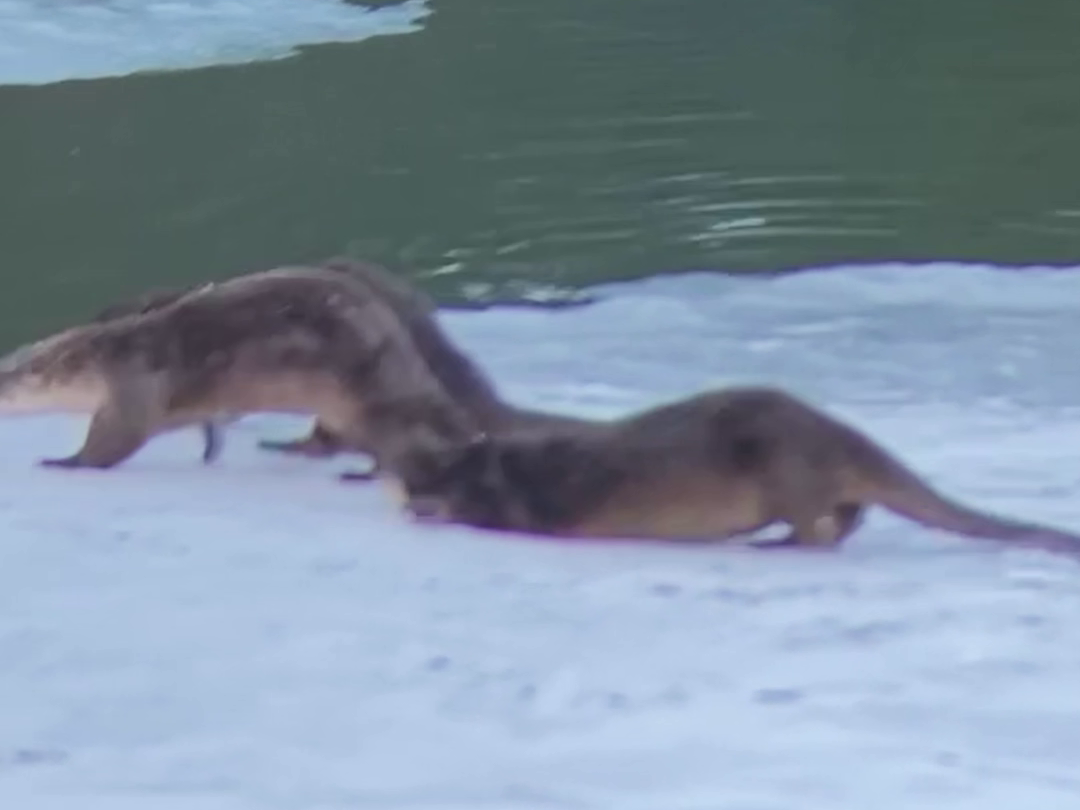
Subsequently, the group arrives at a latrine site. Although the species is not considered highly territorial, they do advertise their presence to other otters in the vicinity by scent marking.
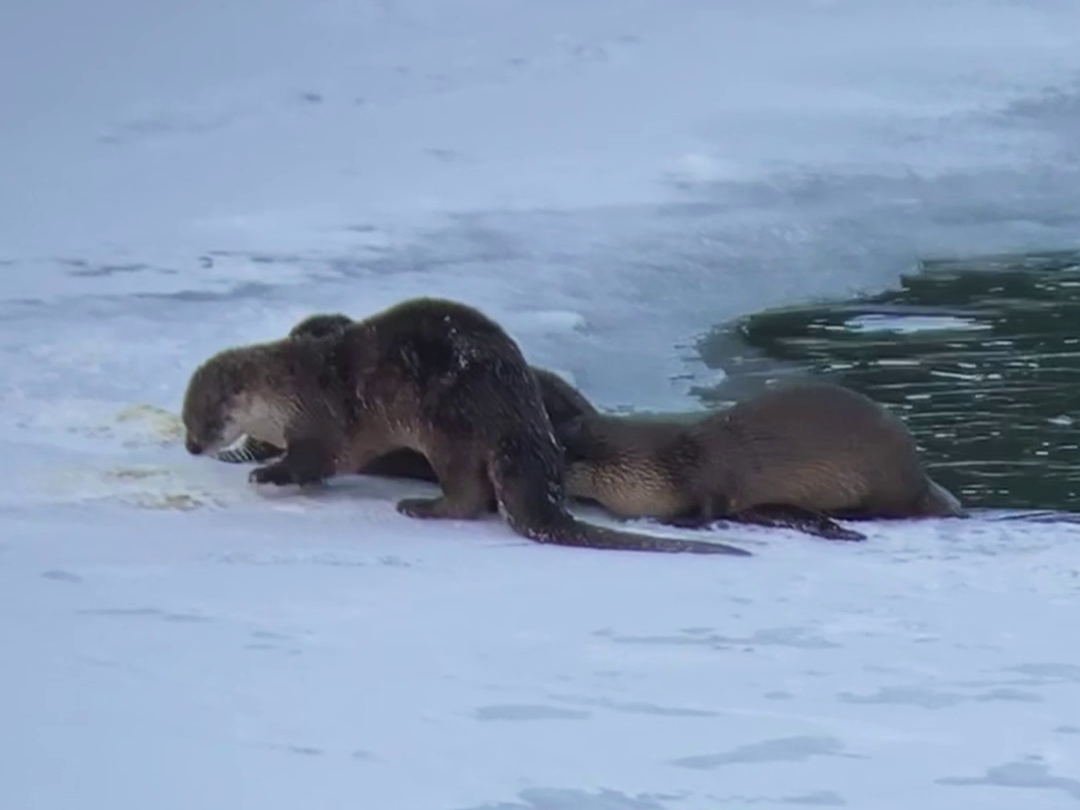
Consequently, after a brief sniff to find out who is in the area, one of the otters leaves a “message” of its own. The practice may also be used to advertise reproductive readiness.
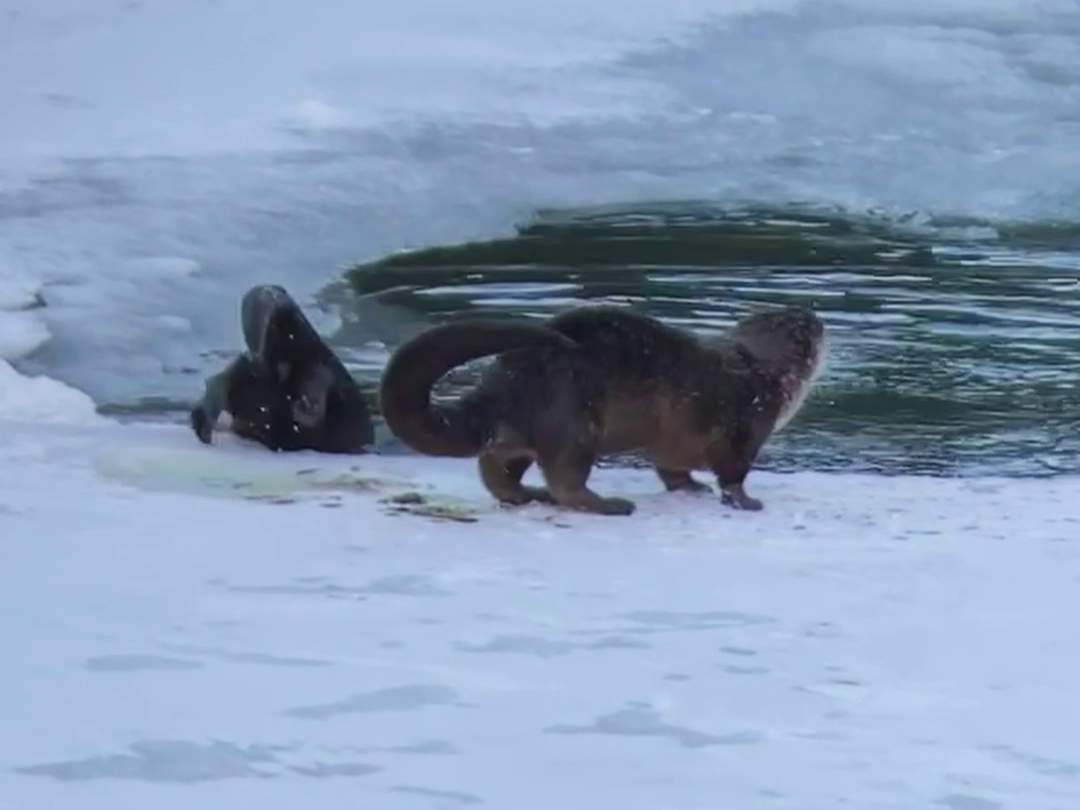
As it does its business, we note its thick tail. Along with their webbed paws, tails are used both for propulsion and steering when in the water.
Boldly curious
Meanwhile, the other two otters dive into the water. Otters have excellent vision when underwater, even in low light.
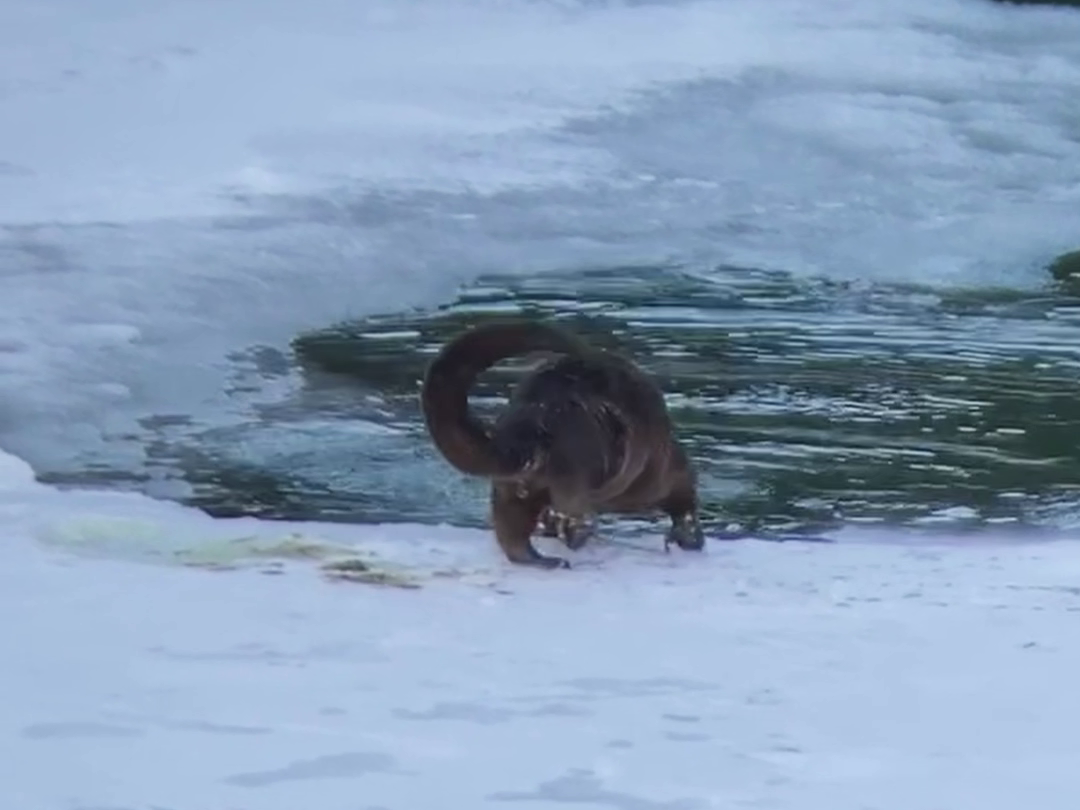
However, this means they are short-sighted on land. Perhaps for this reason, along with bold curiosity, the species regularly approaches boats to investigate.

As the last otter disappears under the surface, it is clear that playtime is over, and a meal is on the cards.


