

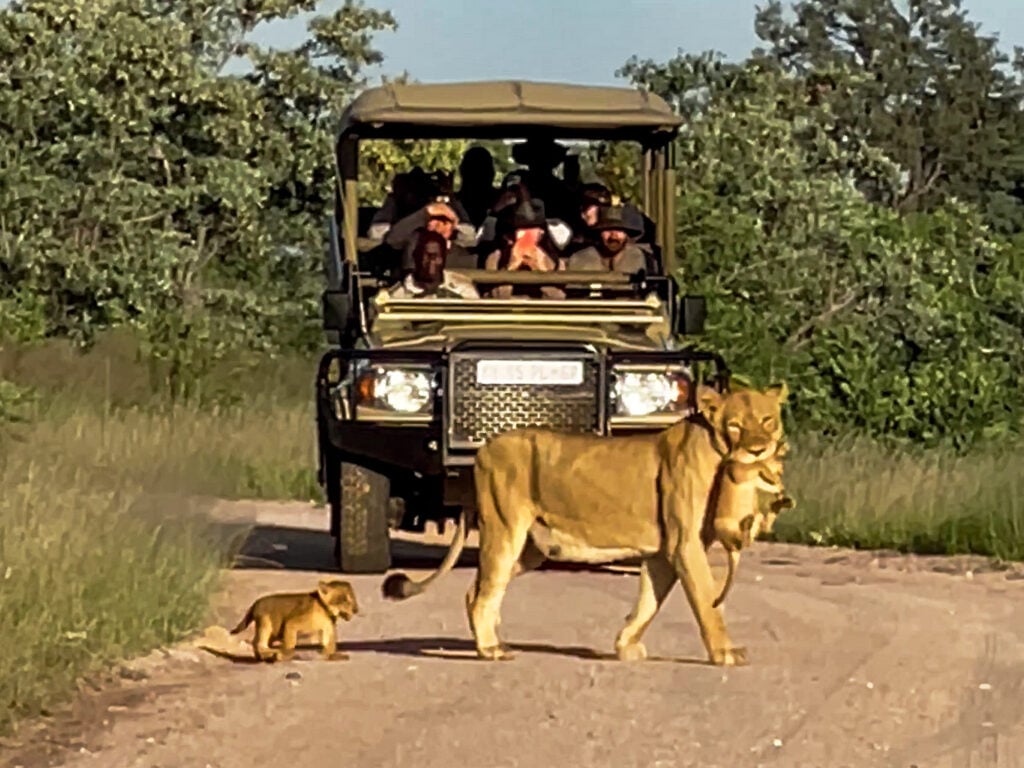
While lions are the largest terrestrial predators in Africa, like almost all mammals, they are defenceless at birth. Thankfully, lionesses make excellent mothers, protecting their young in a hostile environment.
Amy Krantz shared this endearing footage with Latest Sightings. She filmed the encounter while on a game drive in South Africa’s Greater Kruger National Park.
Watch the video now:
Join our WhatsApp group with thousands of members from our community to ensure you never miss another adorable moment, like this lioness and her cubs spotted in the Greater Kruger National Park. https://latestsightings.com/whatsapp-updates
Curious cub
As we join Amy at the sighting, we encounter an adorable sight. A tiny lion cub is standing alongside her vehicle, curiously looking into the camera.
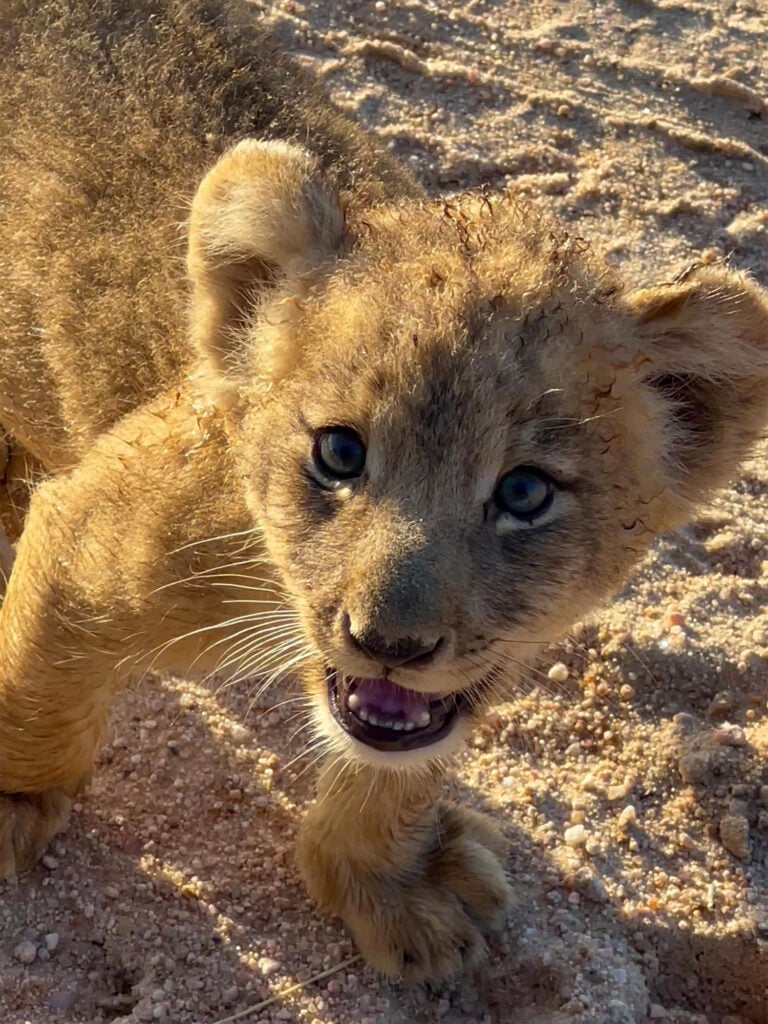
Although it’s difficult to give a precise estimate, the footage suggests the cubs are less than 8 weeks old. Lionesses gestate for 110 days before giving birth to litters of up to four cubs.
Communicative cats
Subsequently, we see the cub utter a yelp-like call. While we might think it is trying to be fierce, it is actually making a contact call to attract its mother’s attention.
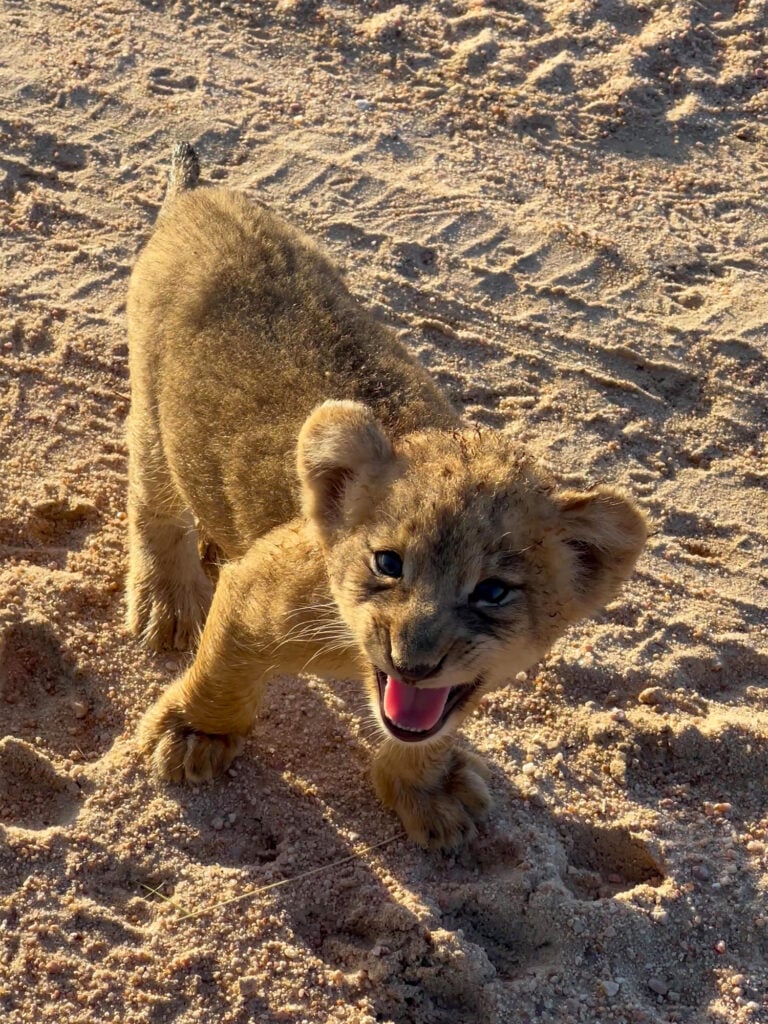
Lions are extremely vocal cats, using a range of sounds to communicate different messages. The most recognised, of course, are their deep-throated roars, which carry for up to 8 kilometres (5 miles). Incidentally, did you know that the lion’s roar featured in MGM movies is actually a tiger?
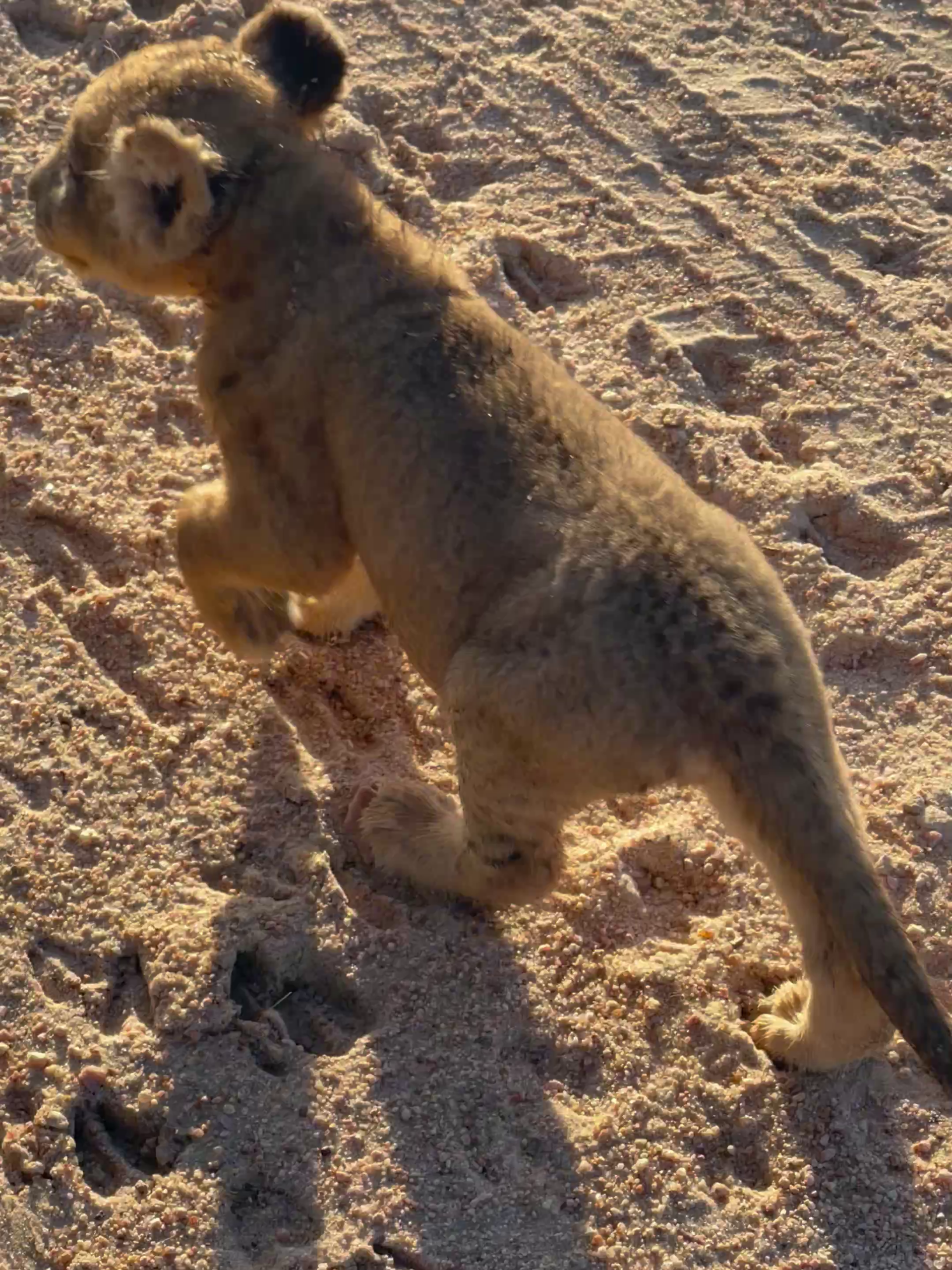
As Amy coos at the cute cub overload she enjoys the little one turns and heads off in search of Mom.
Moving day
In the next sequence, we see a lioness emerge from the roadside vegetation. She is carrying a cub in her mouth, to the delight of Amy and the onlookers in another open safari vehicle.
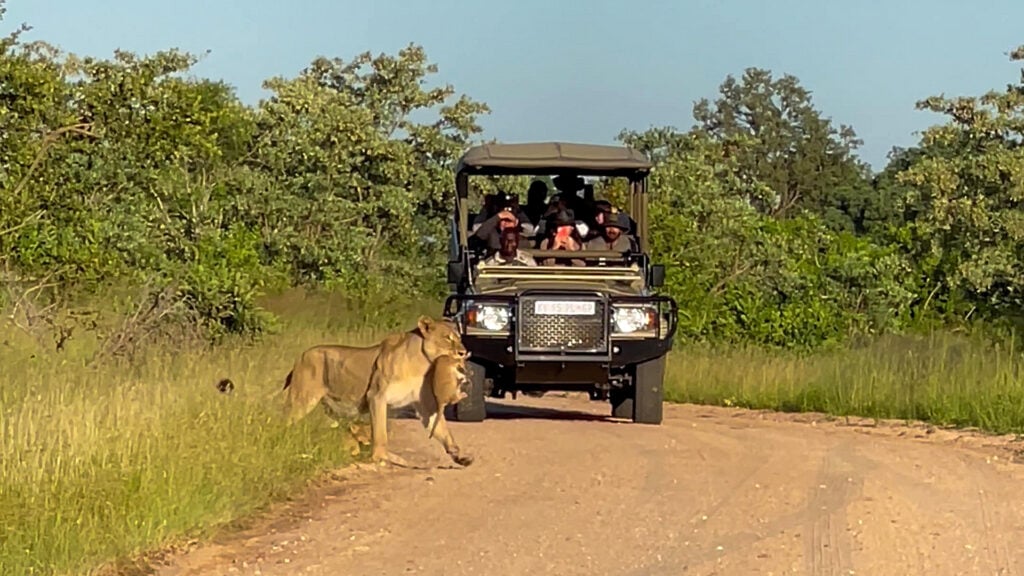
Like all cats, this is how lionesses move their cubs from one place to another. In this case, she is probably moving to a new den site.
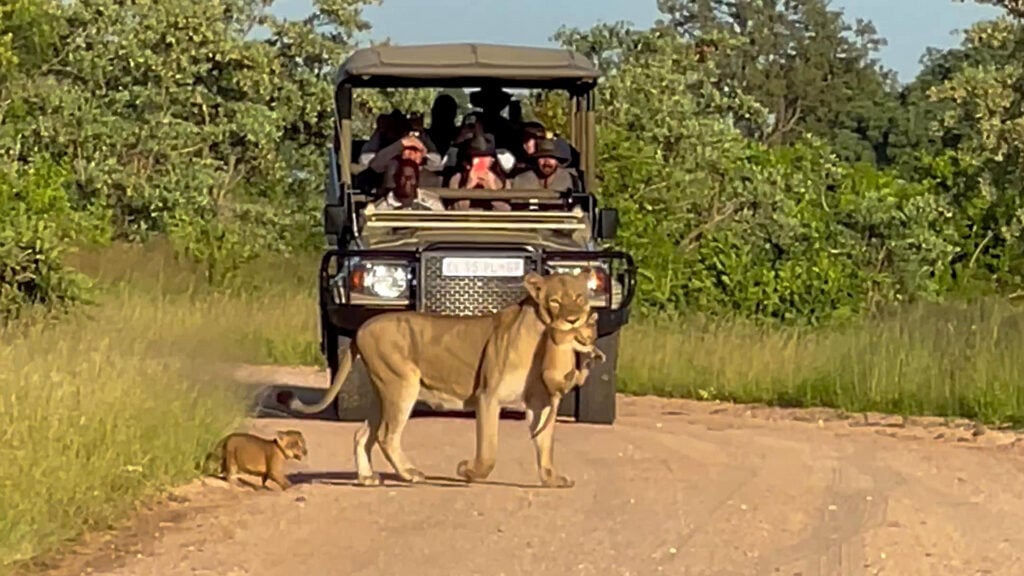
The only drawback is that she can only carry one cub at a time, as becomes apparent when her second cub comes trotting after her. While cubs are young and defenceless, lionesses move them occasionally to reduce the risk of detection by other predators.
Automatically relaxed
Get our Best Sightings as they Come in
While the second cub squeals for Mom to wait up, the other dangles limply in her jaws. A cub’s body automatically relaxes when picked up this way, reducing the risk of injury.
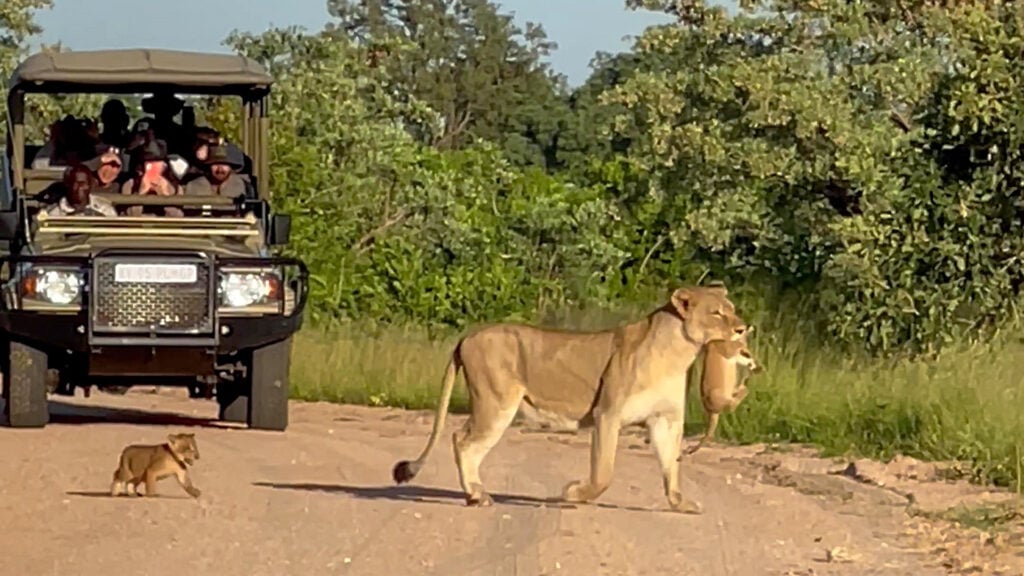
Additionally, it draws its hind legs close to the belly. This prevents thorns or other obstacles from catching them.
Over the road and onwards
In the care of their devoted and protective mother, the two cubs safely cross the road, and the family disappears into the bush. Cubs are generally only introduced to the rest of the pride when they are two months old.
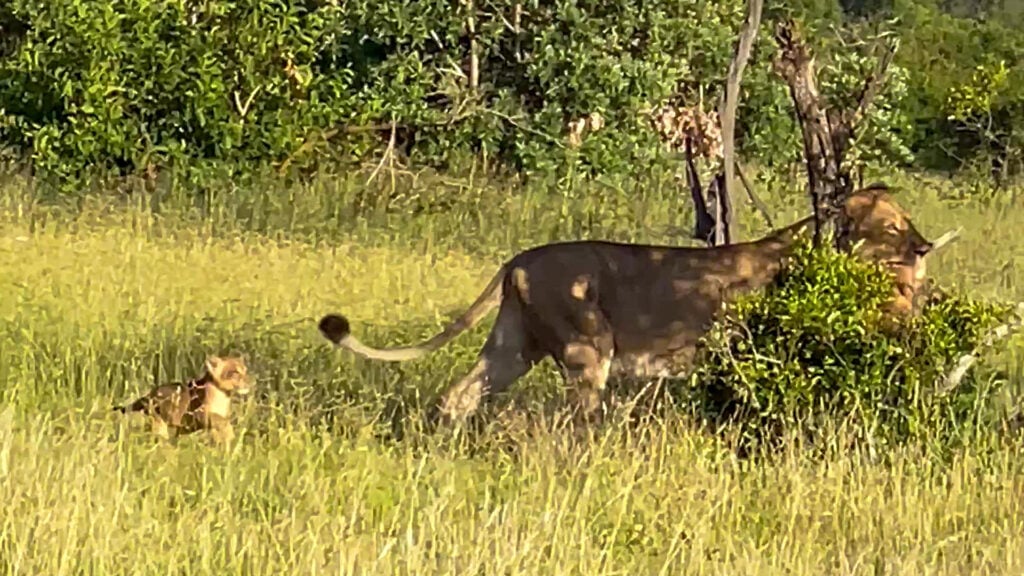
While it can be an intimidating time in their young lives, they soon begin forming the lasting bonds that will define their lives. While female cubs often stay with their natal pride for life, young males are forced out when they reach sexual maturity. So, there are many adventures ahead for these two youngsters.


